


When people search for Philadelphia Eagles vs Las Vegas Raiders Match Player Stats, they usually want one clear thing: who actually controlled the game. Not just the final score, but the leaders in passing yards, rushing yards, receiving yards, touchdowns, and tackles. The challenge is that these teams do not play every season, so results can vary depending on the year and game location. To keep this useful and easy to follow, this article breaks down the most recent meeting and explains what the numbers mean, who led each category, and what those stat lines tell you about how the game really unfolded.
Why This Matchup Can Be Confusing Without a Date
Because the Eagles and Raiders are in different conferences, their head-to-head games happen on a rotating schedule, plus occasional preseason meetings. That means you might see different box scores from different years when you search, and the “top performers” will not match across seasons. If you are comparing player totals, make sure you are looking at the same game date. In this breakdown, the focus is the most recent regular-season matchup, which produced a very one-sided stat story and makes it easier to see who led in yards, touchdowns, and tackles.
Game Context That Shapes the Stat Sheet
Match player stats always reflect game script. When one team leads early and controls the clock, their rushing totals rise, the trailing team throws more, and defensive tackle numbers often spike because the ball is constantly coming their way. In this meeting, Philadelphia built control early and never let it go. That created a box score where the Eagles’ offense was efficient and balanced, while the Raiders’ offense had a hard time creating any explosive plays at all. Understanding that context helps you read the stat leaders correctly instead of assuming every low number is a player issue.
Passing Leaders: Efficiency vs Volume
The passing-yard leader on the Eagles was Jalen Hurts, who finished with 175 passing yards while throwing 3 touchdown passes and no interceptions. That line stands out because it wasn’t built on heavy volume; it was built on clean reads, good timing, and finishing drives. On the Raiders’ side, Kenny Pickett threw for 64 passing yards with 1 interception, and the passing game never found rhythm. When you see that gap, it doesn’t just mean one quarterback “played better.” It usually means one offense stayed ahead of the chains, protected the passer, and converted in scoring territory, while the other lived in long-yardage situations and could not sustain drives.
Rushing Leaders: The Ground Game That Controls the Day
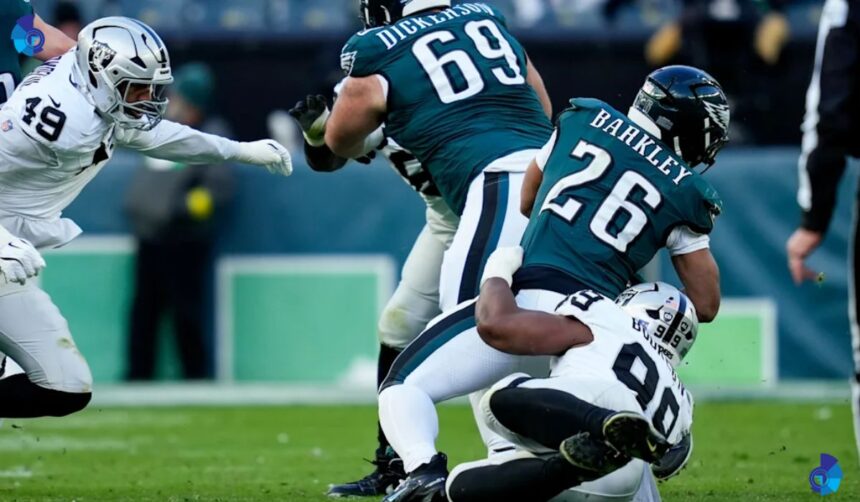
The rushing leader for Philadelphia was Saquon Barkley with 78 rushing yards and 1 rushing touchdown. His total matters because it came with steady workload and kept the offense on schedule. The Eagles also spread carries to keep the tempo and physicality consistent, including Tank Bigsby and Hurts adding meaningful yardage on the ground. For Las Vegas, Ashton Jeanty led with 35 rushing yards, and the team total stayed low because the Raiders spent the game trying to survive on short possessions rather than building a stable run identity. When one team wins the time-of-possession battle by a wide margin, rushing stats often tell the story before you even look at the score.
Receiving Leaders: Who Moved the Chains and Who Finished Drives
The receiving-yard leader for the Eagles was Dallas Goedert with 70 receiving yards, and he also caught 2 touchdown passes. That is the kind of stat line that shows both “between-the-20s value” and “red zone value,” which is rare in the same game. A.J. Brown added a touchdown catch and helped stretch the field, while DeVonta Smith posted a strong yard-per-catch impact on limited targets. For the Raiders, Brock Bowers led with 28 receiving yards on 6 catches, and that combination is a sign of a short, contained passing plan—lots of quick throws with little room after the catch. If your top receiver ends with fewer than 30 yards, it usually means the defense won at the line of scrimmage and the offense never unlocked space downfield.
Touchdowns and Scoring Production: Who Actually Put Points on the Board
Touchdown leadership matters because it shows who converted possessions into points. Philadelphia’s passing touchdowns were concentrated through Hurts, with two scores to Goedert and one to Brown, and the rushing touchdown came from Barkley. That distribution tells you the Eagles finished drives with high-percentage options: tight end routes in scoring areas and a power back to close the door on the ground. Las Vegas did not score a touchdown in this game, so there were no Raiders to list as touchdown leaders. In a stats-focused review, that absence is important—because it means the Eagles’ defense wasn’t just “good,” it was constantly preventing any single explosive moment from turning into points.
Tackle Leaders: Why Defensive Totals Look the Way They Do
Tackles are often misunderstood because more tackles do not automatically mean better defense. A defender can rack up tackles simply because the opposing offense runs a lot of plays and reaches the second level. In this matchup, the Raiders’ defense logged high tackle totals because Philadelphia controlled the ball and ran enough plays to create tackle opportunities. Devin White led the Raiders with 16 total tackles, followed by Isaiah Pola-Mao with 10 and Elandon Roberts with 9. On the Eagles’ side, Nakobe Dean led with 8 total tackles, which fits a game where the Raiders struggled to keep drives alive. Lower tackle totals for the defense that dominates are common because there are simply fewer snaps to defend.
Sacks, Pressures, and the Hidden Stats That Explain the Passing Numbers
While yards and touchdowns grab attention, sacks and quarterback hits often explain why one passing game looks smooth and the other looks stuck. Philadelphia recorded 4 sacks, and Brandon Graham posted 2 sacks, a game-changing number because it consistently put the Raiders behind schedule. The Eagles also came away with an interception, which further tilted field position and momentum. On the Raiders’ side, the defense managed some disruption, but not enough to prevent Philadelphia from turning efficient drives into touchdowns. When a team is both pressuring the quarterback and preventing explosive passes, you tend to see exactly what happened here: low yards, low scoring, and constant punts or stalled possessions.
The Big Picture: What the Leaders Tell You About How the Game Was Won
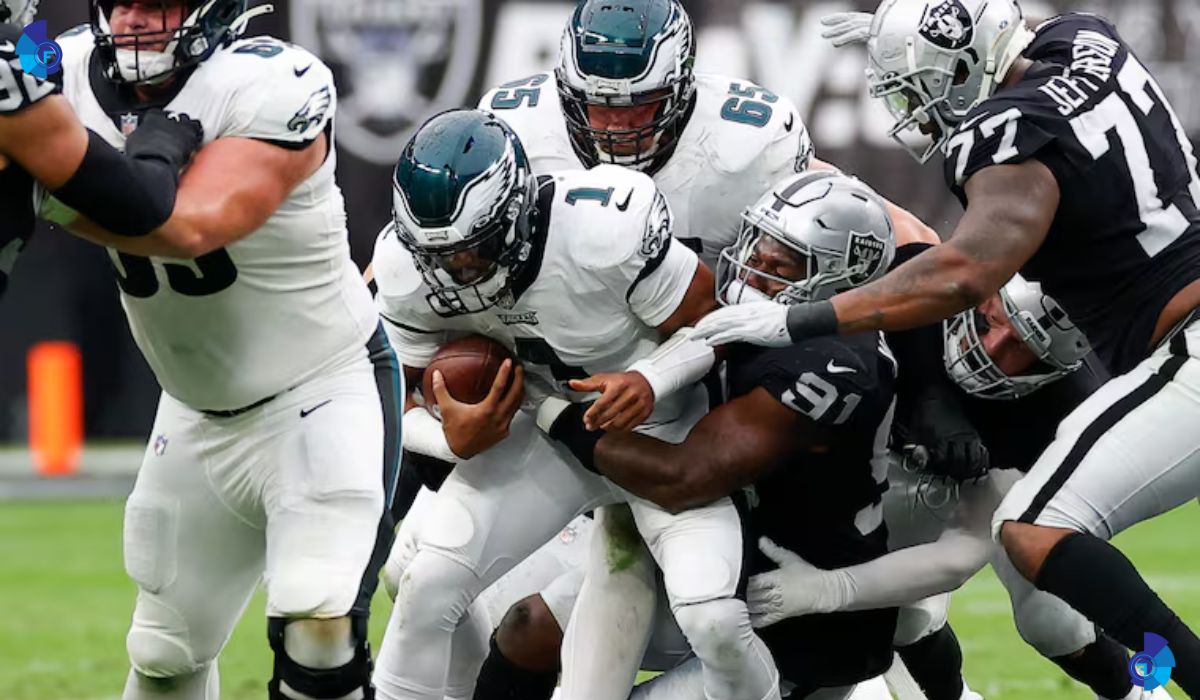
If you pull all the category leaders together, a simple story appears. Philadelphia’s leaders were productive in the most meaningful ways: Hurts with touchdowns and clean decision-making, Barkley with steady rushing and a score, and Goedert producing both yardage and red-zone finishes. Las Vegas’ leaders were mostly “survival leaders,” meaning their top yardage totals were small and their tackle leaders were busy because they were on the field defending for long stretches. That isn’t an insult; it’s what the stat sheet looks like when one team controls tempo, wins early downs, and forces the opponent into a predictable plan.
How to Use These Stats When You’re Comparing Players
When you compare match player stats across games, avoid judging by one number alone. A quarterback’s yardage can be low in a dominant win because the team didn’t need to throw late. A receiver can lead a team with modest yardage if the offense never had time to develop deeper routes. A defender can lead in tackles because their unit couldn’t get off the field. The best way to read a box score is to pair the leaders with efficiency: touchdowns per attempt, yards per target, and whether the production happened in scoring situations. In this matchup, Philadelphia’s leaders were not just the biggest totals—they were the players who created separation on the scoreboard.
Final Thoughts / Conclusion
This matchup is a great example of why people search Philadelphia Eagles vs Las Vegas Raiders Match Player Stats in the first place: the leaders reveal the real shape of the game. Jalen Hurts led with controlled passing and three touchdowns, Saquon Barkley led the rushing effort and added a score, and Dallas Goedert topped the receiving chart while finishing twice in the end zone. On defense, Devin White’s tackle total reflects how much Philadelphia possessed the ball, while Nakobe Dean’s team-leading tackles reflect how quickly Las Vegas drives ended. If you use the leaders as a map—yards plus touchdowns plus tackles in context—you get a clear, honest picture of who truly influenced the outcome.
Frequently Asked Questions (FAQs)
1. What does “match player stats” usually include for an NFL game?
It typically includes passing (completions, attempts, yards, touchdowns, interceptions), rushing (carries, yards, touchdowns), receiving (catches, yards, touchdowns, targets), and key defensive numbers like tackles, sacks, interceptions, and passes defended. Some box scores also include fumbles, kicking, punt returns, and time of possession details that help explain why the leaders ended where they did.
2. Why can the yard leader and touchdown leader be different players?
Yards show how much a player moved the ball, while touchdowns show who finished drives. A receiver can lead in yards but not score, while a tight end or running back can score multiple times on shorter red-zone touches. That’s why it’s smart to look at both categories before deciding who had the biggest impact.
3. Is a high tackle total always a sign of a great defensive performance?
Not always. A high tackle total can mean a player was active and reliable, but it can also mean their defense spent a lot of time on the field. In games where the opponent controls possession, defenders often pile up tackles simply because they face more snaps and more rushing attempts.
4. Why do some quarterbacks have low passing yards in a win?
In a comfortable win, a team may lean on the run game, shorten the game clock, and avoid unnecessary risks. That lowers passing attempts and total yardage. Efficiency becomes more important than volume, so a quarterback can have fewer yards but still post a strong game through touchdowns, third-down conversions, and mistake-free football.
5. How should I judge a receiver’s performance if targets are low?
Look at yards per catch, whether they converted key downs, and whether they were a red-zone option. A receiver can change a game with just a few catches if those catches extend drives or create touchdowns. Targets also depend on coverage and game plan, so low targets don’t always mean the player wasn’t effective.
6. What defensive stats best explain why an offense struggled?
Sacks, quarterback hits, tackles for loss, and interceptions are the biggest indicators. They show the defense disrupted timing, forced long-yardage situations, and created negative plays. When those numbers swing heavily to one side, you usually see the struggling offense finish with low yards per play and very few scoring chances.
7. If I’m writing a recap, which stat leaders matter most to mention first?
Start with the passing touchdown leader, then the top rusher, then the top receiver, and finally the top tackler or sack leader. Those four categories usually capture the game’s main storyline in a simple way: who scored, who controlled tempo, who created explosive moments, and who shut down the other team.
For More: fogmagazine.co.uk