



The Miami Dolphins vs Denver Broncos Match Player Stats from the September 24, 2023 meeting stand out because the game was decided by situational dominance, not just raw yardage. Miami finished with a 70–20 win, and the numbers show a clear pattern: the Dolphins converted in the red zone, stayed efficient on third down, and repeatedly hit explosive gains that flipped field position in seconds. If you’re trying to understand “who led what” and why the score got so lopsided, the best place to look is how each team performed when the field got short and the pressure got high.
Score snapshot
Miami scored 70 points and piled up 726 total yards, while Denver scored 20 and had 363 total yards. That gap tells you the story at a high level, but it becomes even clearer when you connect the points to the key situations. Miami kept turning drives into touchdowns, and Denver had too many trips that ended without the same payoff, especially once the Dolphins’ offense started stacking quick strikes and short fields.
| Team | Q1 | Q2 | Q3 | Q4 | Final |
| Denver Broncos | 7 | 6 | 0 | 7 | 20 |
| Miami Dolphins | 14 | 21 | 14 | 21 | 70 |
The quarter-by-quarter scoring also matters because it shows there was no “one-quarter fluke.” Miami put up points in every quarter, which usually means three things happened together: early-down success, clean red zone execution, and enough big plays to force defensive stress. When that happens, third downs often become shorter and easier, and red zone chances turn into touchdowns instead of field goals.
Why red zone, third down, and big plays decide games
“Red zone” is about finishing, “third down” is about staying on the field, and “big plays” are about breaking the normal rhythm of a defense. A team can have solid total yards but still lose if it stalls inside the 20 or can’t extend drives. On the other hand, when a team converts touchdowns in the red zone, keeps possessions alive on third down, and adds explosive plays, the score can snowball quickly because the opponent gets fewer comfortable drives and more desperate ones.
Dolphins passing leaders and efficiency
Miami’s passing efficiency was a major driver of the blowout. Tua Tagovailoa completed 23 of 26 passes for 309 yards and four passing touchdowns, producing an extremely efficient day where the offense consistently stayed ahead of the chains. The completion rate matters as much as the yardage, because it reduces wasted downs and makes third down more manageable. Miami also got a short appearance from Mike White, who went 2 of 2 for 67 yards and a touchdown, which adds to how explosive the day was overall.
The receiving production shows how Miami created easy yards and sudden points at the same time. Tyreek Hill led the way with 9 catches for 157 yards and a touchdown, including a long touchdown catch of 54 yards that instantly changed the feel of the game. Miami also got a one-catch, 68-yard touchdown from Robbie Chosen, which is the clearest example of a “one play, seven points” swing. When an offense can score from distance like that, it reduces the number of snaps needed to score and forces the defense to play with more caution, which often opens space underneath.
Dolphins rushing leaders and the “explosive run” effect
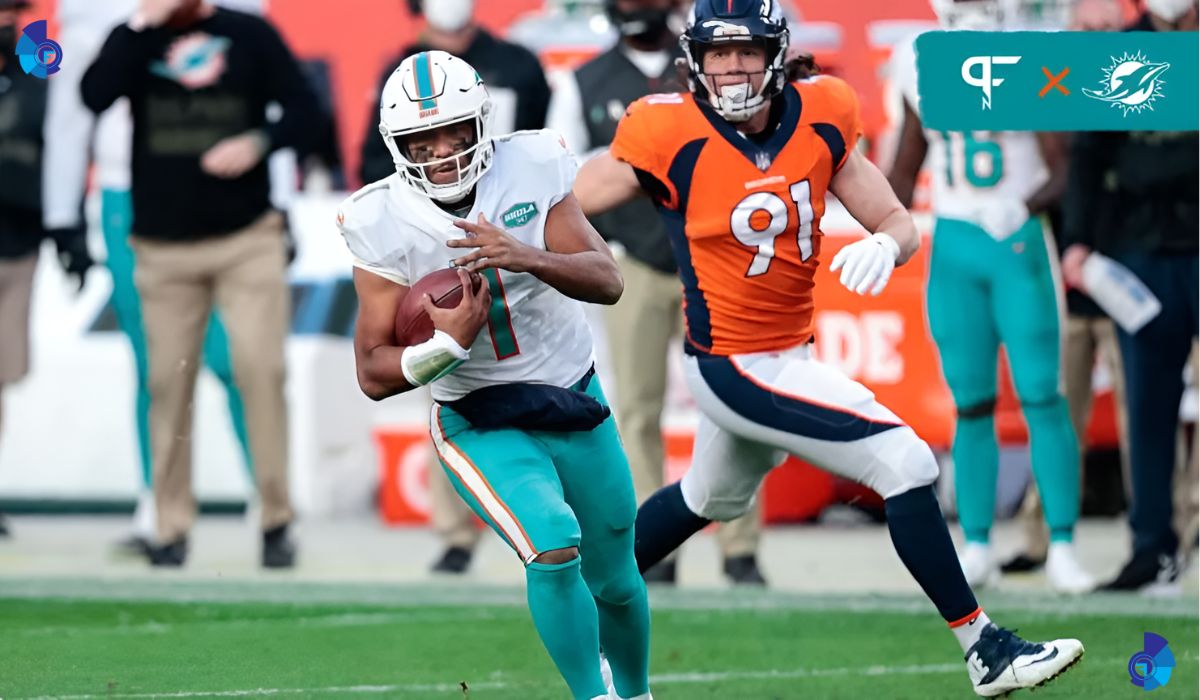
On the ground, Miami’s numbers were even more eye-opening. The Dolphins rushed 43 times for 350 yards, and the workload was led by De’Von Achane, who ran 18 times for 203 yards and two rushing touchdowns. His long run of 67 yards is a classic “big play” that changes the math for a defense, because it turns a normal series into a scoring threat without needing multiple conversions. Miami also leaned on Raheem Mostert, who carried 13 times for 82 yards and scored three rushing touchdowns, showing how the team could finish drives with power and tempo once it got close.
It’s also worth noticing the depth of the run game. Chris Brooks added 66 rushing yards on 9 carries, including a long run of 52 yards. When a team gets chunk plays from more than one runner, it becomes harder for a defense to “solve” the problem with a single adjustment. At that point, third-and-short situations show up more often, and red zone trips become frequent because the ball reaches scoring range quickly and repeatedly.
Broncos passing and skill-position leaders
Denver’s passing line looks productive on paper, but it came with setbacks that mattered in key moments. Russell Wilson finished 23 of 38 for 306 yards with one touchdown and one interception. The Broncos’ top receiver was Courtland Sutton, who had 8 catches for 91 yards and a touchdown, while Jerry Jeudy added 81 yards on 5 catches. Those are real contributions, but the bigger issue was that Denver couldn’t match Miami’s efficiency when it needed stops or quick answers, and the Broncos’ offense didn’t get the same steady help from the run game.
Broncos rushing and why balance matters on third down
Denver rushed 20 times for 69 yards, led by Javonte Williams with 42 yards on 11 carries. When the run game is that limited, third downs tend to become longer, and the defense can focus more on coverage looks designed to limit explosive throws. That doesn’t mean a team can’t win with passing, but it usually means you have to be extremely sharp on third down and in the red zone, because you’re living in tighter windows and more predictable situations.
Red zone leaders and finishing drives
The red zone numbers explain a big part of the final score. Miami went 6-for-6 in the red zone, which means every trip inside the 20 ended in a touchdown. Denver went 1-for-4, which means several opportunities did not turn into seven points. Over a full game, that difference is massive, because even two empty red zone trips can swing momentum and force a team into riskier decisions later. Miami’s red zone success also connects directly to the rushing touchdowns from Mostert and Achane, because the run game provided a reliable finish when the field shrank.
Third down leaders and staying on the field
Third down efficiency reveals who controlled possession and tempo. Miami converted 5 of 9 third downs, while Denver converted 3 of 12. Those numbers aren’t just percentages; they translate into extra drives and extra snaps for Miami’s offense, plus more time on the field for Denver’s defense. As the game wore on, Miami’s ability to sustain drives, or score quickly and force short Denver possessions, created a loop where the Broncos had fewer chances to settle into a rhythm.
Big play leaders: the gains that broke open the game
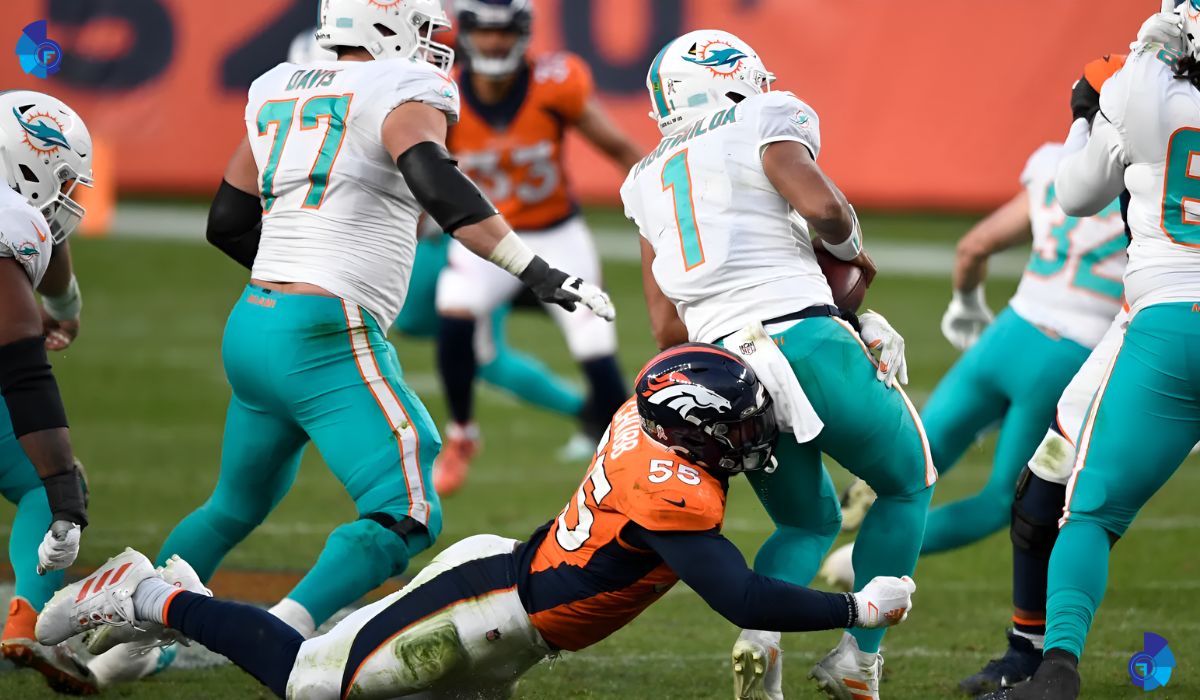
Big plays are usually defined as explosive runs or passes that gain a large chunk at once, and Miami had them from multiple angles. Hill’s 54-yard touchdown catch is an obvious highlight, but it wasn’t the only “instant damage” play. Chosen’s 68-yard touchdown is another example of how Miami didn’t need long, methodical drives to score. These are the kinds of plays that make defensive play-calling difficult, because a defense can feel like it’s “one coverage mistake away” from giving up points.
On the ground, Achane’s 67-yard run and Brooks’ 52-yard run show how Miami consistently broke through at the second level. Explosive runs are especially tough because they don’t just move the ball; they punish pursuit angles, tire defenders, and set up easier play-action looks. When an offense is hitting chunk runs, linebackers often step forward more aggressively, which can open windows behind them, and that balance is one reason Miami’s offense looked so fast and so clean.
Defensive and turnover notes that shaped field position
Turnovers and short fields often show up quietly inside a blowout, and they still matter. Denver had three turnovers, while Miami had zero, which is a major advantage in any game, especially one where the opponent is already scoring efficiently. Even when an offense is moving the ball, turnovers erase drives, shift momentum, and often give the other team a shorter path to the red zone. When you combine a turnover edge with perfect red zone results, you can see how the score can climb rapidly.
How to use these stats when you review future matchups
If you want to apply this kind of breakdown to any Dolphins-Broncos meeting—or any NFL matchup—start by asking three simple questions: Who finished in the red zone, who extended drives on third down, and who created explosive gains? In this game, Miami answered “yes” to all three, which is why the final score looks historic. Denver had useful passing yardage and a few strong individual lines, but the situational splits show why those yards didn’t translate into enough points to keep pace.
Final Thoughts
This matchup is a clear example of how player stats become more meaningful when you connect them to situations. Tagovailoa’s efficiency, Achane’s explosive rushing, and Hill’s big-play receiving weren’t just impressive totals; they were production that showed up at the moments that decide games. When a team goes perfect in the red zone, holds its own on third down, and adds multiple long touchdowns, the scoreboard can move faster than most defenses can adjust, and that’s exactly what the numbers show here.
Frequently Asked Questions (FAQs)
1. Which players led the Dolphins in the biggest impact stats?
Tua Tagovailoa led Miami’s passing efficiency, De’Von Achane led the rushing explosion, and Tyreek Hill led receiving production with a long touchdown that shifted momentum quickly.
2. What does 6-for-6 in the red zone actually tell you?
It means Miami scored a touchdown on every trip inside the 20-yard line, which is the fastest way to separate on the scoreboard because there are no “empty” scoring chances.
3. Why do third down stats matter when the final score is already high?
Third down conversions show who controlled possession and tempo. Miami extended enough drives to keep scoring pressure on Denver and limit Denver’s time with the ball.
4. What counts as a “big play” in a stat review like this?
A big play is an explosive gain that flips field position fast, such as long touchdown passes or long runs that instantly move the offense into scoring range.
5. Did Denver have any strong individual performances despite the loss?
Yes. Russell Wilson threw for over 300 yards, and Courtland Sutton had a productive day with a touchdown, but the overall situational results didn’t support a comeback.
6. How can I compare team efficiency without advanced analytics tools?
Use simple box score indicators: red zone results, third down conversions, turnovers, yards per play, and who produced the longest runs and catches.
7. If the teams play again, will these same leaders always repeat?
Not necessarily. Players, game plans, and injuries change year to year, so it’s best to use the same method—red zone, third down, and explosive plays—rather than assuming the same outcome.