


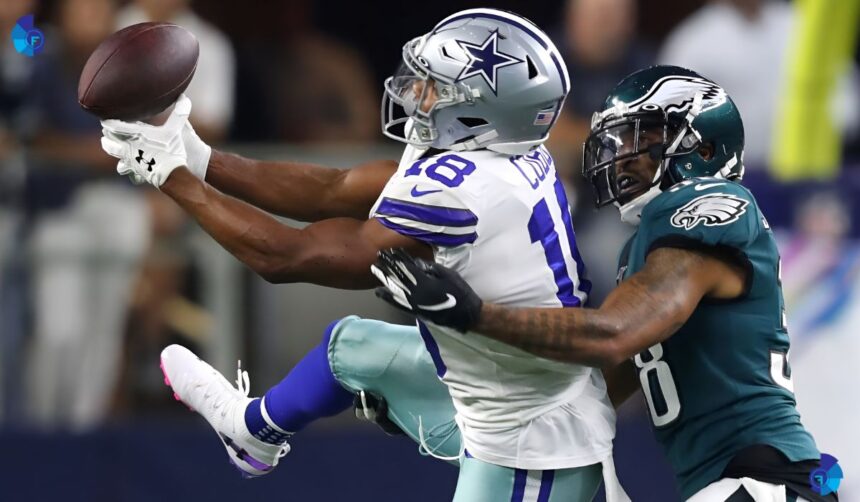
The phrase Dallas Cowboys vs Philadelphia Eagles Player Stats usually means one thing: you want the key numbers that explain who actually drove the game. In this rivalry, the score rarely tells the whole story. A quarterback can play clean but be held back by drops or field position. A running back can “feel” quiet while still changing the defense’s shape. A wide receiver can swing momentum with just two or three big catches. This guide compares the main skill-position leaders using a recent head-to-head matchup as the example, then shows how to read those numbers in a way that makes sense to any fan, anywhere.
Because Dallas and Philadelphia play more than once across many seasons, people sometimes mix stats from different games without realizing it. To keep things clear, the comparisons below are based on one specific matchup: Eagles at Cowboys on November 23, 2025, a 24–21 Dallas win. The leaders and totals referenced are from that game’s box score, which makes it a clean snapshot for comparing quarterback, running back, and receiver impact without blending different weeks or seasons.
Final Score and Skill-Player Leader Table
Before we dig into what the numbers mean, it helps to see the leaders side-by-side. Think of this table as the “quick read” version of the game: who threw it, who carried it, and who caught it best for each team.
| Category | Dallas Cowboys Leader | Philadelphia Eagles Leader |
| Final Score | Cowboys 24 | Eagles 21 |
| Passing (QB) | Dak Prescott: 23/36, 354 yards, 2 TD, 1 INT | Jalen Hurts: 27/39, 289 yards, 1 TD, 0 INT |
| Rushing (RB/QB) | Javonte Williams: 20 carries, 87 yards | Jalen Hurts: 7 carries, 33 yards, 2 TD |
| Receiving (WR/TE) | George Pickens: 9 catches, 146 yards, 1 TD | A.J. Brown: 8 catches, 110 yards, 1 TD |
Quarterbacks Compared: Volume, Efficiency, and “Game Control”
Dak Prescott’s line jumps off the page because the yardage is high: 354 passing yards with 2 passing touchdowns. That kind of total usually signals one of two things—either the passing game was unstoppable, or Dallas needed explosive plays to climb back into the game. In this matchup, it was a bit of both. The Cowboys ultimately produced the bigger downfield impact through the air, and that matters because chunk gains are the fastest way to flip a tight rivalry game. Even with the single interception, Prescott’s production shows Dallas was able to create and finish drives through the passing attack when it mattered most.
Jalen Hurts, meanwhile, posted a different style of strong game: 289 passing yards, 1 passing touchdown, and no interceptions. That “0” in the turnover column is important in any rivalry game, because turnovers are often the difference between a win and a loss. Hurts also completed more passes than Prescott, which suggests Philadelphia was able to stay on schedule often enough to keep the offense moving. The key contrast is how the two passing performances translated into scoring moments: Dallas got more passing touchdowns, while Philadelphia leaned on Hurts as a runner near the goal line.
What the QB Numbers Don’t Tell You (But Still Hint At)
A quarterback stat line is more than completions and yards. It hints at how the game was played. Prescott’s higher yardage and two passing scores suggest Dallas found success attacking the Eagles’ coverage, especially when they needed momentum. Big passing totals often come from a mix of accurate throws and receivers creating separation, but they also reflect game flow: if a team falls behind early, they frequently have to throw more aggressively. That doesn’t diminish the performance—it simply explains why raw totals can rise quickly in a comeback setting.
Hurts’ line hints at a different kind of control. Completing 27 passes with no interceptions usually means the quarterback avoided major mistakes while still pushing the ball enough to keep defenses honest. But when you pair that with two rushing touchdowns, it tells you Philadelphia’s offense trusted Hurts to finish drives in high-pressure spots. In other words, his passing helped sustain the offense, and his legs helped cash in points. That combination is a big reason why his box score often looks “balanced” even when the Eagles’ passing touchdown number is lower.
Running Backs and Rush Value: Why Carries Aren’t the Whole Story
For Dallas, Javonte Williams led the backfield with 20 carries for 87 yards. That is a workhorse-style line: steady volume, solid yardage, and a clear signal that Dallas believed the run game could keep the Eagles honest. Even without a rushing touchdown from Williams in this matchup, those carries can still be valuable because they shape the defense’s posture. When a back consistently gains positive yards, it forces linebackers to step forward, which can open windows behind them for play-action and crossing routes.
Philadelphia’s rushing leader in this game was not a traditional running back at all—it was Hurts, with 7 carries for 33 yards and 2 rushing touchdowns. That is a huge clue about how the scoring happened. A quarterback can lead a team in rushing yards without the run game “dominating,” but rushing touchdowns from the quarterback are high-value plays. They often come in the red zone where defenses are compressed, and they usually require strong decision-making. In practical terms, Hurts’ rushing scores show Philadelphia’s short-yardage and goal-line plan was effective, even if the overall rushing yardage was not overwhelming.
How to Compare Rushing Leaders Fairly in This Rivalry
When fans compare rushing stats, they sometimes treat it like a simple contest: who had more yards. But in Cowboys–Eagles games, rushing success is often about leverage and timing. Williams’ 87 yards on 20 carries show Dallas got meaningful ground production across the game, which can help sustain drives and keep the pass rush from pinning its ears back. That matters a lot against a defense that thrives on pressure and disruption. A running back doing “just enough” can be the hidden ingredient behind a quarterback’s clean pocket on key downs.
Hurts’ rushing impact works differently. His total yards are modest, but the touchdowns are decisive. A quarterback sneak or designed keeper for a score is not a “pretty” stat line, yet it’s one of the most efficient ways to turn a long drive into seven points. In head-to-head games like this, that efficiency can outweigh raw yardage, because it turns tight red-zone moments into points without needing perfect coverage reads or contested catches.
Wide Receivers Compared: Production, Explosiveness, and Touchdowns
For Dallas, George Pickens put up the top receiving line: 9 catches for 146 yards and a touchdown. That combination—high volume and high yardage—usually indicates a receiver who was both targeted often and consistently productive. It also suggests Dallas had answers for coverage looks, whether through route design, timing throws, or simply winning one-on-one matchups. A 146-yard game in a rivalry setting isn’t just a nice number; it can tilt the entire defensive plan, forcing safety help and creating opportunities for others.
Philadelphia’s top receiver was A.J. Brown, with 8 catches for 110 yards and a touchdown. That’s a classic WR1 line: strong volume, strong yardage, and a score to show for it. Brown’s production reflects the Eagles’ ability to create chunk gains without relying solely on trick plays or broken coverage. It’s also the type of output that keeps a team competitive even if the run game is more about finishing than piling up yards. In a one-score game, a receiver topping 100 yards and finding the end zone is exactly the kind of impact performance teams expect from a star.
The “Secondary” Receiving Story That Often Decides Close Games
The receiving leaders get the headlines, but rivalry games are often decided by the second and third options. In this matchup, Dallas also got meaningful production from CeeDee Lamb (4 catches, 75 yards) and Jake Ferguson (5 catches, 60 yards). That spread matters because it prevents the defense from locking onto one player as the entire plan. If Pickens is the big-yardage engine, players like Lamb and Ferguson help keep drives alive and help the offense stay flexible across different down-and-distance situations.
Philadelphia also showed balance behind Brown. DeVonta Smith (6 catches, 89 yards) played the role of the steady chain-mover and explosive complement, and Saquon Barkley (7 catches, 52 yards) added value as a receiving back. When a running back contributes in the passing game, it often signals that the offense is creating easy answers against pressure and coverage. Those “simple” catches can flip second-and-long into third-and-manageable, which changes what the defense can call next.
Reading Player Stats Without Getting Misled by One Number
Player stats are powerful, but they can also be confusing if you focus on just one category. Passing yards alone don’t tell you if the offense was efficient in the red zone. Rushing yards alone don’t tell you whether the runs came in high-leverage moments. Receiving yards alone don’t tell you whether the catches were timely or whether they came in a single burst. The best way to compare leaders is to look at the combination of volume, scoring, and game context—especially in a rivalry where momentum swings are common.
That’s why this matchup is such a useful example. Dallas’ top story is the passing production led by Prescott and finished by Pickens, supported by enough rushing volume from Williams to keep the offense balanced. Philadelphia’s top story is Hurts’ dual role: productive as a passer, mistake-free through the air, and a major scoring factor as a runner, with Brown and Smith providing the receiving punch. Both approaches can win games. The difference, in this case, was how the final points landed and how the most impactful plays clustered late.
Why Different Cowboys–Eagles Games Can Produce Totally Different Leaders
If you look up Dallas Cowboys vs Philadelphia Eagles player stats on different days, you might find very different leader lines. That isn’t because the information is wrong—it’s because the rivalry is sensitive to matchups, injuries, and game plans. Some games lean heavily on the run because weather or defensive structure pushes teams that way. Other games explode through the air because coverage breaks down or a team is chasing points. Even the same players can have very different stat shapes from one matchup to the next.
That’s also why it helps to anchor your comparison to one game at a time. When you do, the numbers become a story you can actually interpret. In the November 23, 2025 matchup, Dallas’ passing leaders created the biggest yardage advantage, while Philadelphia’s quarterback run game created the most direct scoring advantage. When you understand that split, the final score makes more sense—and the player stats feel less like random data and more like an explanation of how the game unfolded.
Final Thoughts
The cleanest way to understand Dallas Cowboys vs Philadelphia Eagles Player Stats is to compare leaders by role and by value, not just by who had the biggest number. In the November 23, 2025 head-to-head example, Dak Prescott’s passing yardage and two passing touchdowns highlight Dallas’ ability to generate explosive offense through the air, while George Pickens’ 146-yard day shows how one receiver can shape the entire defensive response. On the other side, Jalen Hurts’ mistake-free passing plus two rushing touchdowns show how a quarterback can control scoring outcomes even without leading every category in raw yardage, and A.J. Brown’s 110 yards and a score confirm Philadelphia had top-end receiving impact. When you read the stats with that lens, you get a clear, fair picture of who led, how they did it, and why the game ended the way it did.
Frequently Asked Questions (FAQs)
1. What does “player stats” usually include for Cowboys vs Eagles games?
It usually refers to the box score categories that show individual production, especially passing, rushing, and receiving totals. Most fans focus on quarterback efficiency, rushing leaders, and top receivers because those positions explain the biggest swings in points and momentum.
2. Why do I see different stats when I search the same matchup?
Dallas and Philadelphia play regularly, and many seasons include two meetings, sometimes more if they meet in the playoffs. If you don’t match the exact date, you might accidentally read stats from a different week or a different season.
3. Which quarterback stats matter most beyond yards and touchdowns?
Completions and attempts show volume and style, but turnovers are often the biggest swing factor in rivalry games. A “clean” game with no interceptions can still end in a loss, but it usually gives the team a better chance to win.
4. How can a QB lead rushing touchdowns without huge rushing yards?
Quarterbacks often score on short-yardage plays near the goal line, where the run might only be one to three yards. Those touchdowns are high value even if the total rushing yards look modest.
5. What’s the fairest way to compare running backs in one game?
Look at carries, yards, and whether the runs helped sustain drives or set up easier passing situations. A running back can have a strong impact without scoring if their runs keep the offense balanced and avoid constant long-yardage downs.
6. Why do star wide receivers sometimes have “quiet” games in this rivalry?
Defenses often design their plan around removing the top target, especially in division matchups where teams know each other well. That can shift production to secondary receivers, tight ends, or running backs catching passes.
7. If I want a quick takeaway, which three numbers should I check first?
Start with the final score, the quarterbacks’ touchdown-to-turnover picture, and the top receiving yardage for each team. Those three checkpoints usually explain whether the game was decided by explosive passing, clean execution, or red-zone finishing.
For More: fogmagazine.co.uk